It’s Monday morning and there’s a list of two hundred names on your screen. Every one of them could be a customer. None of them know who you are yet. You have maybe an hour before your first call, and somewhere in that hour you’re supposed to research these people, find something worth saying, and write emails that don’t get deleted on sight. That math has never really worked.
This is the exact spot where AI earns its keep. Used well, it clears the grunt work off your plate so you can spend your time on the part only you can do, which is talking to people and closing. Used badly, it floods inboxes with obvious robot mail that trains buyers to ignore you. This guide walks through how to use AI for sales prospecting so you land in the first camp, not the second.
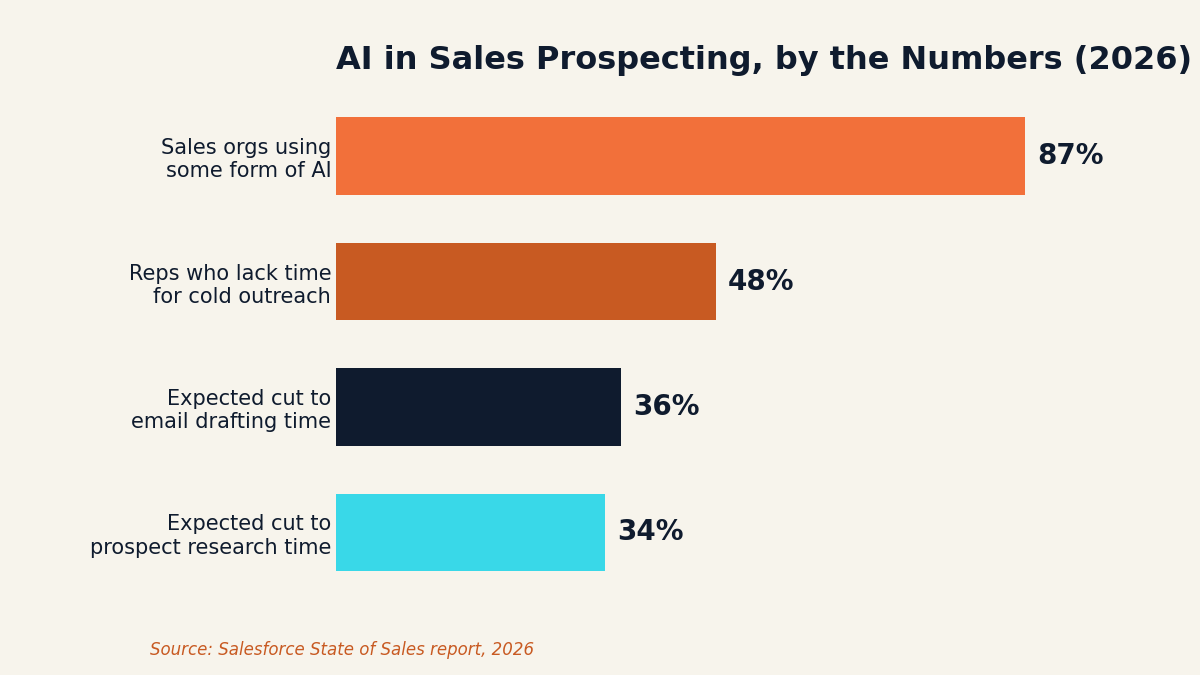
According to Salesforce’s State of Sales report for 2026, the average seller now spends only 40% of their time actually selling, and 48% of reps say they don’t have the bandwidth to do proper cold outreach. AI is the most realistic way to win some of that time back. Reps who use it report saving around twelve hours a week.
What AI is genuinely good at in prospecting
Before the steps, it helps to be clear about the split. AI is fast, tireless, and decent at first drafts. It’s bad at judgment, taste, and knowing when something is off. So you hand it the repetitive setup and you keep the decisions.
The tasks it handles well are research summaries, list building, drafting a first version of an email, spotting patterns in who replies, and writing quick variations to test. Sellers in the same Salesforce report expect AI agents to cut prospect research time by 34% and email drafting by 36% once they’re fully rolled in. Those two chores are exactly where most of your morning disappears.
What it can’t do is decide whether a lead is actually worth your time, read the room on a call, or notice that the “reason to reach out” it found is three years old. Keep those for yourself.
How to use AI for sales prospecting, step by step
The workflow below is simple on purpose. You can run it with a general assistant like ChatGPT or Claude, or with a purpose built prospecting tool. The steps matter more than the brand.
1. Build a tight list, not a big one
The instinct is to go wide. Resist it. A short list of people who genuinely fit what you sell will always beat a giant list of maybes. Feed AI your ideal customer profile in plain language, for example “operations leaders at US logistics companies with 50 to 500 employees,” and ask it to help you sort and prioritize the accounts you already have.
AI is good at reading a messy spreadsheet and grouping it, flagging obvious mismatches, and pulling public details into a quick summary. It is not a source of truth for contact data, so treat anything it hands you as a starting point you still verify.
2. Let AI find the real reason to reach out
Generic outreach dies because it has no reason to exist. The fix is a trigger, a specific recent event that makes your message relevant right now. New funding, a leadership hire, a product launch, a hiring spree, an office opening. Ask AI to research an account and surface anything recent and public you could reasonably mention.
This is where personalization stops being a buzzword and starts being useful. An email that references a real event, sent within a day or two of it, gets read at a completely different rate than “I came across your company.” Signal based outreach commonly lands reply rates in the 15 to 25% range, versus the 3 to 5% most cold email limps along at.
3. Draft with AI, then cut it in half
Now let AI write, but give it the raw material first. Paste in the trigger you found, the prospect’s role, and the one problem you actually solve for people like them. Ask for a short draft, then edit hard. The best cold emails in 2026 run about 50 to 125 words: one line of real context, a sentence or two on the problem, one line on how you help, and a small ask.
Cut anything that sounds like a template. Phrases like “I hope this email finds you well” now signal automated mail and quietly cost you replies. If a sentence could be sent to anyone, delete it. The goal is a note that reads like you wrote it to one person, because with AI doing the heavy lifting, you can afford to.
4. Follow up without nagging
Most replies don’t come from the first email. A sensible sequence is one opener plus two or three follow ups spread over a week and a half or so, each one short and adding a little new value rather than just “bumping this up.” AI is great for drafting that whole sequence at once and for reminding you who is due for a nudge, so nobody slips through the cracks.
Keep your emails landing in the inbox
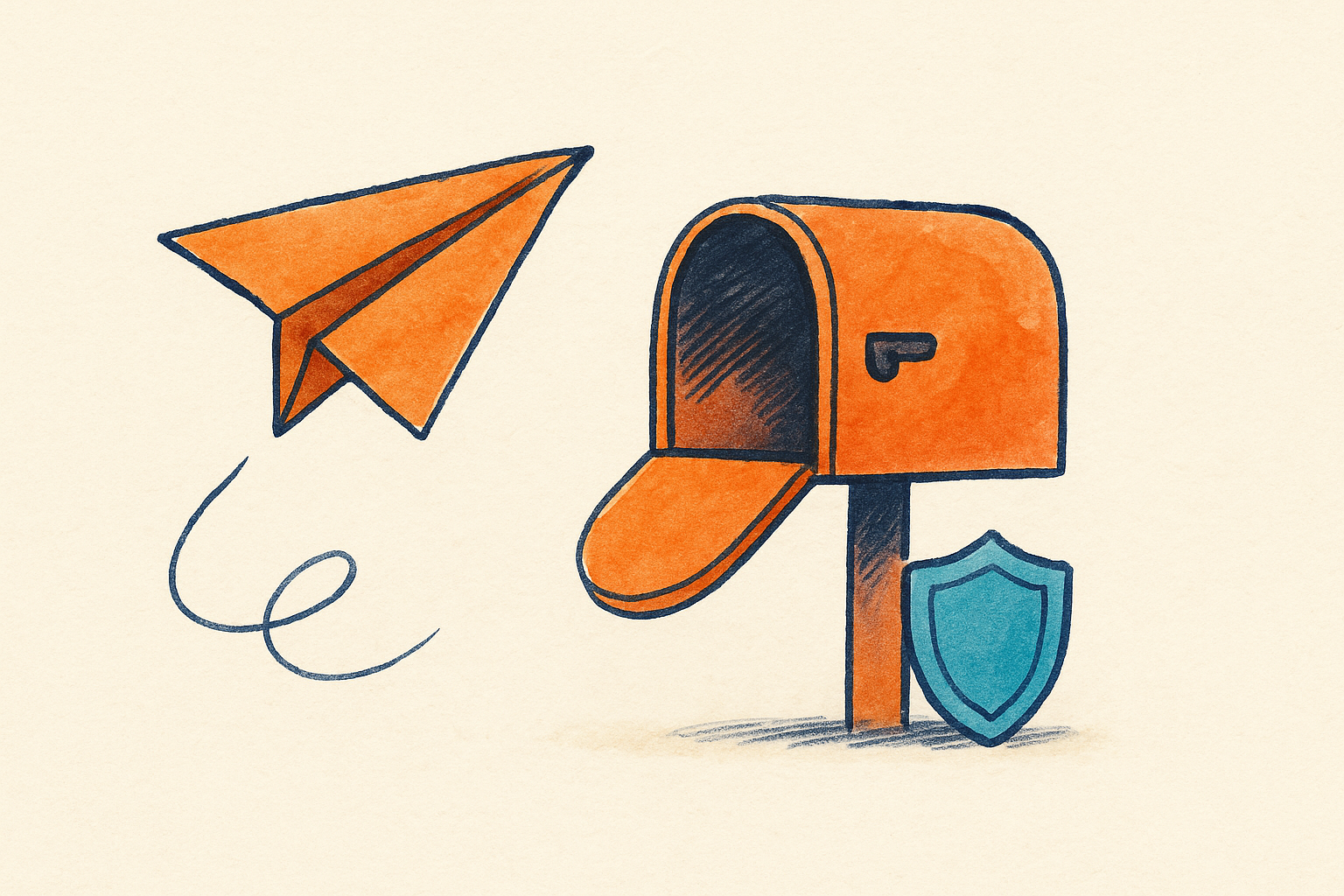
None of this matters if your messages go to spam. In 2024 and 2025, Google and Microsoft tightened the rules for bulk senders, and the basics are no longer optional. Make sure your domain has SPF, DKIM, and DMARC set up. If those words mean nothing to you, that’s a quick job for whoever runs your email, and it’s the single most valuable thing you can do for deliverability.
Beyond the technical setup, volume is the trap. When people point AI at “send as many as possible,” reply rates fall and spam complaints rise, and a burned sending domain can take weeks to recover. Slower and more relevant beats faster and generic every time. Sending fewer, sharper emails is not just kinder to the reader, it protects the reputation your whole pipeline depends on.
Where AI prospecting goes wrong
The failure mode is always the same: someone lets the machine run unsupervised. Fully automated outbound with no human reading what goes out is how companies torch their domain and their brand at the same time. Reported churn for the fully autonomous “AI SDR” tools has run high precisely because buyers learned to spot and ignore the output.
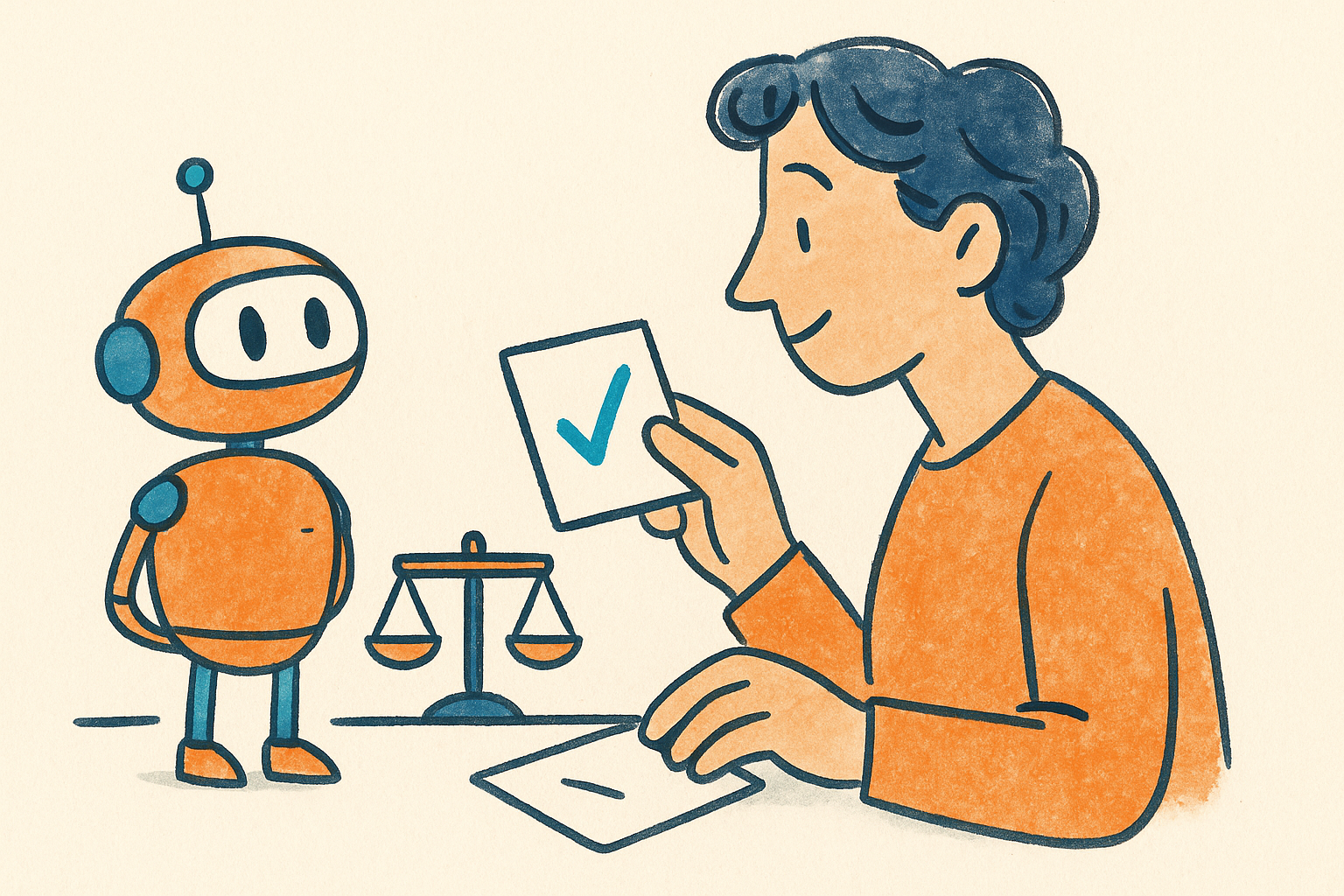
Intent and signal data is also less certain than vendors imply. Even good sources flag accounts that turn out not to be in the market, so a “hot lead” is a hint, not a fact. Keep a human on the approve button. Let AI research, draft, and organize, and let a person decide who to contact and read the final message before it sends. That one habit is the difference between AI that helps you prospect and AI that quietly wrecks your name.
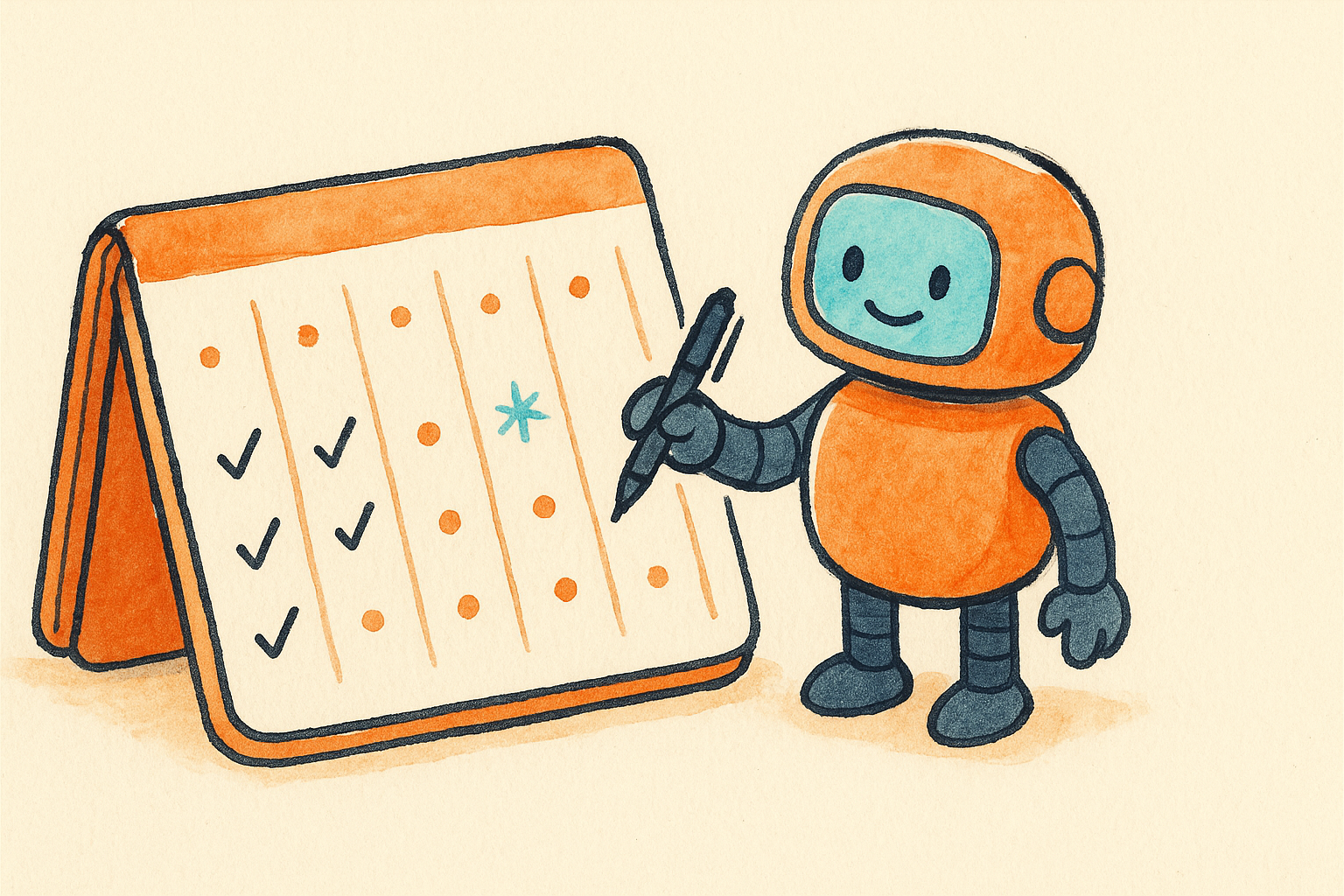
A simple weekly prospecting routine
Here’s how the whole thing fits into a normal week without taking it over.
- Monday: Ask AI to help you build and prioritize a short list of accounts for the week and pull a quick research summary on each.
- Tuesday and Wednesday: Have AI surface a recent trigger per account, draft the openers, then edit each one down to something you’d be happy to receive.
- Thursday: Send, and let AI draft the follow up sequence at the same time.
- Friday: Ask AI to summarize what got replies and what didn’t, and use that to adjust next week’s list and angle.
That’s an hour or two a day of focused work instead of a lost morning, with the boring parts handled.
Key takeaways
- Use AI for the setup work in prospecting: research, list building, first drafts, and follow up reminders. Keep the judgment and the final send for yourself.
- Personalize around a real, recent trigger. That single move is what separates outreach that gets read from outreach that gets archived.
- Keep emails short, around 50 to 125 words, and strip anything that reads like a template.
- Protect deliverability first: SPF, DKIM, and DMARC, plus low volume and high relevance.
- Never let AI run outbound unsupervised. A human on the approve button is the whole game.
Frequently asked questions
What is the best AI tool for sales prospecting?
There’s no single winner. A general assistant like ChatGPT or Claude handles research and drafting cheaply, while dedicated prospecting platforms add contact data and sending. Start with a general tool to learn the workflow, then add a specialist tool once you know what you actually need. Our roundup of the best AI tools for sales compares the main options.
Can AI write cold emails that don’t sound like AI?
Yes, but only if you feed it something real to work with and edit the result. Give it a specific trigger and your actual value, ask for a short draft, then cut the filler. AI writing sounds robotic when it has nothing personal to say, so your job is to hand it the personal part.
Will AI replace sales reps?
Not the ones who talk to people. AI is taking over the repetitive setup around prospecting, but buying decisions still turn on trust, timing, and conversation. The 2026 data shows top performers using AI more than their peers, not being replaced by it. It’s a tool that makes good reps faster.
Is it safe to put prospect data into an AI tool?
Be careful. Check whether the tool trains on your inputs and whether it meets your company’s privacy rules before you paste in anything sensitive. Business and enterprise plans usually offer stronger data protections than free consumer versions. When in doubt, keep personal contact details out of a general chatbot.
The bottom line
Learning how to use AI for sales prospecting isn’t about automating people out of the loop. It’s about handing the tedious research and drafting to a machine so you can spend your hours where deals are actually won. Build a tighter list, reach out with a real reason, keep it short and human, and always read it before you hit send. Do that, and AI becomes the most useful teammate you’ve got. For the bigger picture on how autonomous these tools are getting, see our explainer on what agentic AI actually is.
This article is general information, not professional, legal, or financial advice. Tool features, pricing, and email sending rules change often, so verify the current details before you rely on them. Figures cited were accurate as of July 2026.