You have probably heard that 2026 is the year of AI agents, and you might be wondering what that even means. So what is agentic AI? In plain terms, agentic AI is software that can take a goal, plan the steps to reach it, use tools on its own, and check its own work, rather than just answering one question at a time. It is the difference between an assistant that writes you an email when asked and one that reads the thread, drafts the reply, books the meeting, and updates your CRM without you holding its hand.
That sounds like magic, and the marketing certainly leans into it. The reality in 2026 is more interesting and more mixed. Agents genuinely handle real work now, but they fail in ways worth understanding before you bet a workflow on one. Here is the honest picture.
What agentic AI actually means
A normal chatbot is reactive. You type, it responds, and the loop ends there. An agent is built to pursue a goal across several steps. Give it a task like “find the three cheapest suppliers for this part and email them for a quote,” and it will break that into steps, search, compare, draft the messages, and send them, looping back when something does not work. Three things make an AI agent an agent. It plans, meaning it turns a fuzzy goal into concrete steps. It uses tools, so it can search the web, call an API, run code, or update a database instead of just talking. And it checks itself, noticing when a step failed and trying again. Take away the tools and the self correction and you are back to a clever chatbot.
Agentic AI vs generative AI
People mix these up constantly, so here is the clean split. Generative AI makes something when you ask, a paragraph, an image, a snippet of code. Agentic AI uses that same underlying intelligence to actually do a multi step job in the world. Agents are usually built on top of generative models, so this is a layer, not a rival technology.
| Question | Generative AI | Agentic AI |
|---|---|---|
| What it does | Creates content on request | Completes tasks toward a goal |
| How it works | One prompt, one response | Plans steps, uses tools, loops |
| Human role | You drive every step | You set the goal and approve |
| Example | Write a cold email | Research leads, write, send, follow up |
If you want a deeper look at how the underlying models think before they act, our explainer on what reasoning models actually do pairs well with this one.
How agentic AI differs from older automation
If you’ve used tools that click through screens or move data between apps, you might be thinking this sounds like automation you already have. There’s a real difference. Older automation, the rule based kind, follows a fixed script you build in advance. If step three changes, it breaks and waits for a human to fix the script.
An agent is meant to handle the unexpected. Instead of a rigid path, it works from a goal and figures out the steps as it goes, adjusting when a page looks different or a result surprises it. That flexibility is the whole promise, and it’s also the source of the risk, because a system that improvises can improvise badly. The best results in 2026 often pair the two: rock solid rule based automation for the predictable parts, and an agent only where judgment is actually needed.

What AI agents can genuinely do today
This is where the hype meets some real results. The agents earning their keep in 2026 are narrow and pointed at high volume, well defined work.
Customer service is the standout. Support agents now handle refunds, order questions, and routine escalations across chat and email, resolving the easy 80 percent and passing the tricky cases to a human. Big platforms shipped this as a product, and companies like Salesforce built customer service agents that resolve a large share of tickets on their own.
Finance and operations are the quiet winners. Agents handle invoicing, expense auditing, and forecasting, and teams report closing their books noticeably faster once the repetitive checks are automated. IT operations is another strong fit, with agents triaging alerts and handling routine tickets. The pattern is clear: agents do best on repetitive, rules heavy tasks where the steps are well understood and a mistake is easy to catch.
Software work is a fast growing category too. Coding agents can read a bug report, find the relevant files, propose a fix, and run the tests, with a developer reviewing before anything ships. Research and data agents pull information from many sources and assemble a first draft summary that a person then checks. In every one of these cases the winning setup is the same, a tight task and a human reviewing the output, not an agent left completely alone.

Where AI agents still fall over
Now the part the demos skip. Agents are impressive on a short, clean task and shaky on a long, messy one.
The main weakness is long chains of steps. Each step has a small chance of going wrong, and over ten or twenty steps those chances add up, so the agent quietly drifts off course. Agents are also bad at knowing when they are stuck. A human notices when something feels off and stops. An agent will often barrel ahead confidently in the wrong direction, which is how you get an automated system emailing the wrong people at impressive speed. Recovery is hard too. When a website changes its layout or an API returns something unexpected, an agent that was working yesterday can break today. This is why the serious deployments keep a human on approval for anything that spends money, sends an external message, or touches a customer.

The 2026 reality check
The numbers tell a story of fast adoption running ahead of working deployments. Gartner predicts that up to 40 percent of enterprise applications will include task specific AI agents by the end of 2026, up from less than 5 percent in 2025. That is a huge jump, and it is why every tool you use suddenly has an agent feature.
But building agents and shipping ones that work are different things. Gartner also expects more than 40 percent of agentic AI projects to be canceled by the end of 2027, blaming escalating costs, unclear business value, and weak risk controls. Most agent projects today are still experiments and proofs of concept, not production systems. Looking further out, Gartner sees about 33 percent of enterprise software including agentic AI by 2028, up from under 1 percent in 2024, so the direction is clear even as many early projects wash out.
The takeaway is not that agents are a fad. It is that the winners are the teams starting narrow and measuring results, while the projects getting canceled are the ones that bought the hype and pointed an agent at a vague, sprawling goal.
Why so many agent projects get canceled
That Gartner cancellation number is worth sitting with, because the reasons behind it are avoidable. The projects that fail tend to share a few habits.
The biggest one is scope. A team points an agent at a broad, fuzzy goal like “handle our operations” instead of a single defined task, and the agent flounders. Cost is the next trap, since agents that loop through many steps can quietly run up a large bill, and a workflow that looked cheap in a demo gets expensive at scale. The last is missing guardrails and no way to measure success, so nobody can say whether the agent is actually helping. A real example plays out constantly in 2026: a company gets excited, wires an agent into everything at once, cannot tell if it is saving time, and quietly shelves it six months later. The teams that succeed do the boring opposite, one narrow task with a clear before and after.
Should you use AI agents yet?
For most teams, the answer is yes, but start small and keep a hand on the wheel. A simple framework keeps you on the winning side of those Gartner numbers.
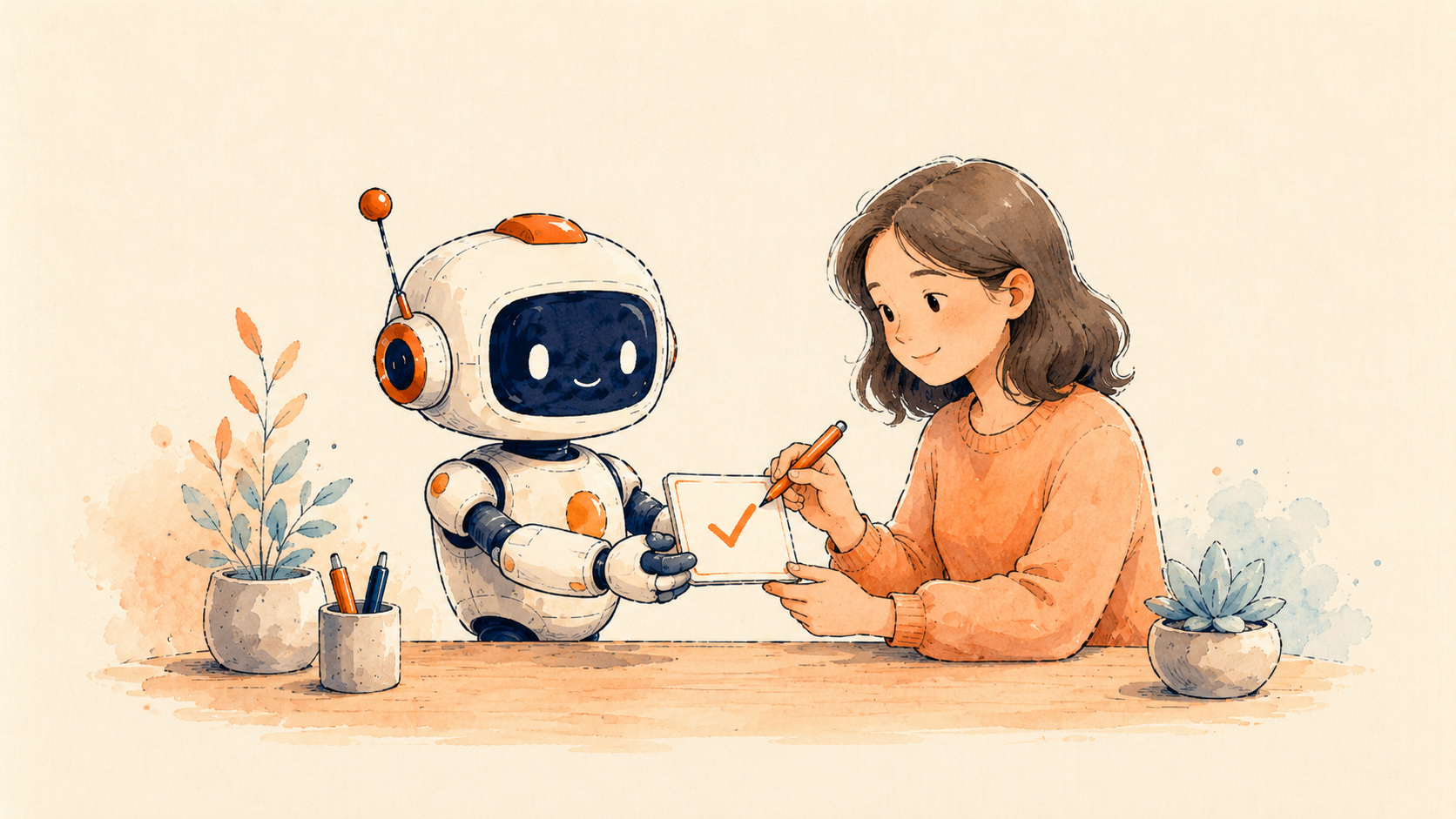
Pick one task that is repetitive, high volume, and well defined, the kind of work people find tedious and a mistake is easy to spot. Give the agent a narrow goal rather than a sweeping one, since “sort incoming support emails by topic” beats “run our support.” Keep a human on approval for anything irreversible, so the agent proposes and a person confirms until you trust it. Then measure the result against doing it the old way. If it saves real time without creating cleanup, expand it. If it needs constant babysitting, that is your signal to pull back. Used this way, agents earn trust one workflow at a time instead of collapsing under a giant mandate.
Key takeaways
- Agentic AI plans steps, uses tools, and checks its own work to complete a goal, while a chatbot just answers one prompt at a time.
- Agents are built on top of generative AI, so it is a new layer, not a replacement.
- They work well on narrow, repetitive, high volume tasks like customer service, invoicing, and IT tickets.
- They struggle with long task chains, knowing when they are stuck, and recovering when something changes, so keep a human on approval.
- Gartner expects up to 40 percent of enterprise apps to include agents by 2026 but more than 40 percent of agentic projects to be canceled by 2027, so start narrow and measure.
Frequently asked questions
Is agentic AI safe to use?
It can be, with guardrails. The safe pattern is to let the agent handle low risk, reversible steps on its own and require human approval for anything that spends money, sends an external message, or changes important data. Trouble comes from handing an agent a broad goal and full autonomy at once.
What is an example of agentic AI?
A customer service agent that reads an incoming ticket, looks up the order, issues a refund within policy, and replies to the customer, escalating to a human only when the case is unusual. It planned, used tools, and finished a task rather than just answering a question.
Will AI agents replace jobs?
They are replacing tasks more than whole jobs so far, especially the repetitive, high volume work. The roles that hold up combine judgment, relationships, and the messy exceptions agents handle badly. For now the realistic picture is people supervising agents, not agents running unsupervised.
What are the best agentic AI tools?
The right tool depends on the job. Many teams start with the agent features already inside the software they use, like their CRM or support platform, before adding a dedicated agent builder. The smarter move is to pick the task first and then the tool, rather than buying an agent platform and hunting for something to point it at.
This article is a plain English explainer, not business or investment advice. Adoption figures and product capabilities change quickly, and the statistics here were accurate as of July 2026, attributed to Gartner. Check current sources before making a purchase or a plan.