Scroll through your feed for five minutes and you’ll see two headlines that can’t both be true. One says nearly every company on earth now runs on AI. The next says only about one in five businesses actually uses it. Same year, same country, wildly different story.
So how many businesses use AI, really? The honest answer is that both numbers are correct. They’re measuring two completely different things, and once you see the gap between them, the whole confusing picture snaps into focus. Let’s walk through what the 2026 data actually says, where the numbers come from, and which one you should trust for your own planning.
The two numbers everyone quotes
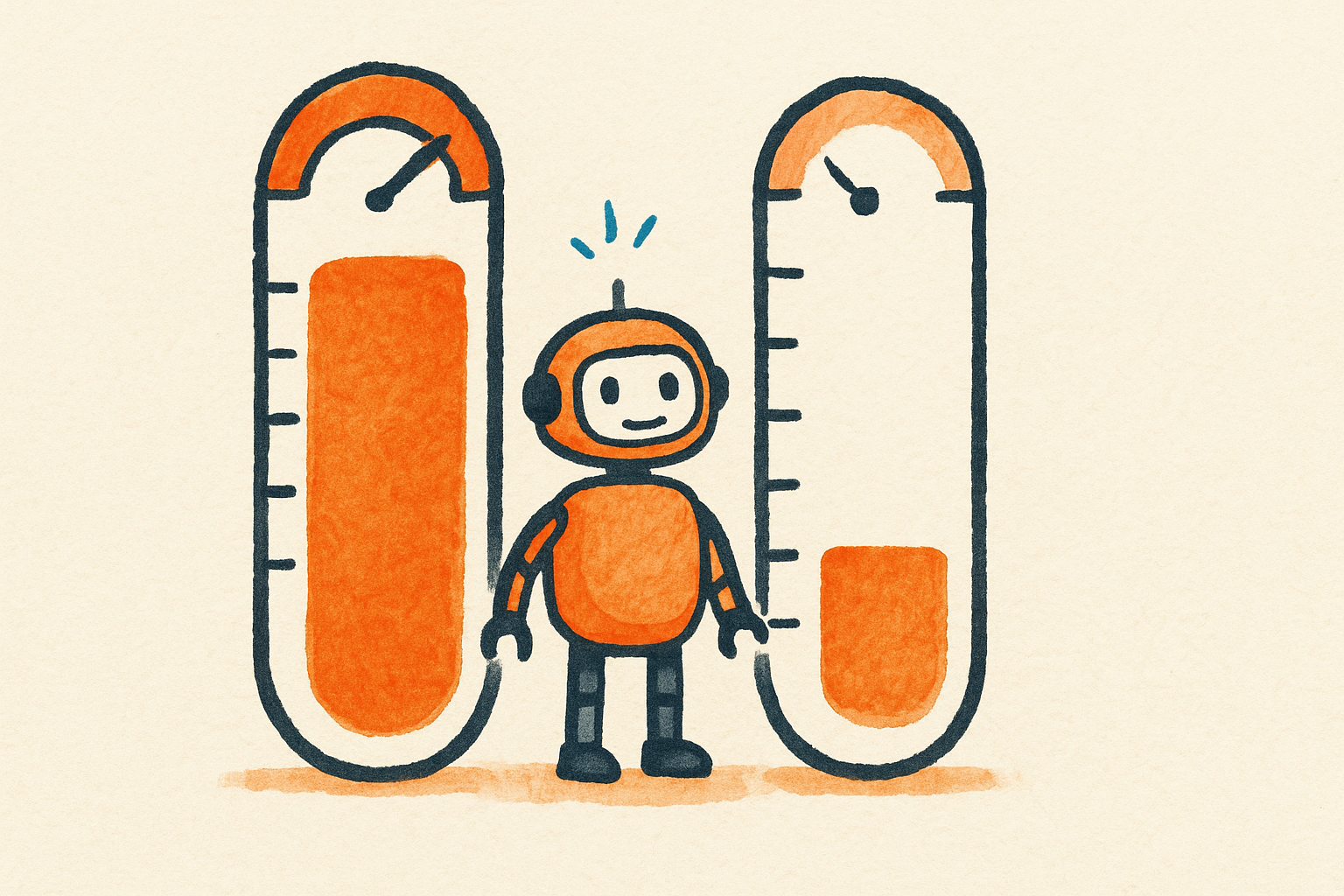
When a press release claims that 80 or 90 percent of companies use AI, it’s almost always pulling from a survey where business leaders were asked if they use AI. Those self reported numbers run high. McKinsey’s widely cited research found that 88 percent of organizations report using AI in at least one business function, up from 78 percent a year earlier.
When a headline says only about one in five, it’s usually pulling from hard government data that measures real, ongoing use. The U.S. Census Bureau tracks this every two weeks, and its most recent data shows overall AI use at American businesses hovering between 17 and 20 percent, with another 20 to 23 percent expecting to start within six months.
Both figures come from 2026. Both are legitimate. The difference isn’t error, it’s definition.
Why the gap is so huge
The size of the gap looks impossible until you ask a simple question: what counts as using AI?
A big self reported survey often counts a single yes. If one person on the marketing team used ChatGPT to polish an email once last quarter, the company checks the box. That’s a real use, but it’s a long way from AI being woven into how the business runs.
Government surveys like the Census Bureau’s aim at something stricter and steadier: is the business genuinely using AI in its operations right now. The Census Bureau even rewrote its question in November 2025 to ask about AI use across any business function, and the number still landed near one in five. Transaction based research from the JPMorgan Chase Institute, which looks at what firms actually pay for rather than what they say, put the figure at 17.7 percent in late 2025. When you measure real spending and real deployment, the number stays modest.
So the short version: the 90 percent camp is counting anyone who has ever touched AI, and the 20 percent camp is counting who has truly put it to work. Keep that distinction in your back pocket and most AI statistics stop being confusing.

How many businesses use AI, broken down by size
Company size is the single biggest predictor of whether a business uses AI, and the spread is dramatic. Bigger companies have the budgets, the technical staff, and the volume of repetitive work that makes AI pay off.
Here’s the current U.S. picture from the Census Bureau’s Business Trends and Outlook Survey, covering data collected through early May 2026.
| Business size | Share currently using AI |
|---|---|
| 250 or more employees | 37% |
| 100 to 249 employees | 32% |
| National average (all sizes) | about 20% |
| 4 or fewer employees | under 20% |
Notice what this does to the national average. The vast majority of American businesses are tiny, so their lower adoption drags the overall rate down toward 20 percent even though large firms are closer to 40 percent. This is also why employment weighted numbers look higher: when you count by workers rather than by companies, roughly a third of the workforce is at a business that uses AI, because big employers adopt faster.
Which industries actually use AI the most
Your industry matters almost as much as your size. Sectors that already live in data and text moved first, while hands on, physical sectors lag well behind.
As of early May 2026, the Census Bureau found the Information sector leading at 39.7 percent and Finance and Insurance close behind at 33.9 percent, both well above the national rate of 19.8 percent. Retail trade sat lower, at around 14 percent currently using AI with about 17 percent expecting to.
If you work in software, media, or financial services, you’re surrounded by AI adoption and it can feel like everyone is doing it. If you run a shop, a restaurant, or a trades business, the real world adoption around you is far lower, and that’s normal, not a sign you’re behind.

Small businesses: the widest gap of all
Small business is where the two numbers pull apart the most, and it’s worth understanding if you run one.
Broad self reported surveys make small business adoption look booming. The U.S. Chamber of Commerce reported that 58 percent of small businesses now use generative AI, up from 40 percent a year earlier. Yet the hard operational data still points to that 17 to 20 percent range for consistent, in production use. Both are true. Plenty of small business owners have tried an AI tool. Far fewer have built it into daily operations.
That pattern is worth sitting with if you own a small business. You don’t need to match the headlines. You need one workflow where AI clearly saves you time, done well, before you add a second. A marketing task is often the easiest place to start, which is why our roundup of AI tools for marketers tends to be where owners get their first real win.
The reasons owners give for holding back are refreshingly practical. In 2025 SBA related research, the top reason non adopters skipped AI was simply not seeing a use case that fit their business, cited by 77 percent. After that came not understanding the tools, no in house expertise, data privacy worries, and unclear return on investment. The barrier is rarely the technology itself. It’s knowing where it would actually help.
Everyone adopted AI. Far fewer are getting value
Here is the part that gets lost in the adoption race, and it might be the most useful number in this whole article.
Using AI and profiting from AI are not the same thing. In McKinsey’s research, almost nine in ten companies had deployed AI somewhere, yet the large majority reported no significant impact on their bottom line. Only about 39 percent said AI had any measurable effect on company wide earnings, and the small group seeing real financial gains was tiny, on the order of a few percent of all firms.
Why? Because value doesn’t come from switching a tool on. It comes from redesigning how work gets done around it. The companies pulling ahead aren’t the ones with the most AI logins. They’re the ones that rebuilt a workflow, retrained a team, and kept a human in charge of the outcome. That’s a boring, unglamorous truth, and it’s the one worth acting on.
Picture a small accounting firm that buys everyone a chatbot subscription and calls it their AI strategy. Six months later, nothing has changed, because no actual process moved. Now picture the firm next door that picked one job, drafting first pass client emails, wrote a shared prompt for it, and had a senior person check the output for a month. That second firm quietly got faster. Same tools, completely different result. The number that matters isn’t whether you use AI, it’s whether a real task got better.
The picture beyond the United States
The same pattern shows up abroad. In the European Union, official Eurostat figures put AI use at about 20 percent of enterprises in 2025, almost identical to the U.S. hard data. And the size gap is just as stark over there: roughly 55 percent of large enterprises used AI compared with about 17 percent of small ones.
So when you zoom out, a fairly consistent story holds across major economies. Once you measure real ongoing use rather than any use, somewhere near one in five businesses is your ground truth for 2026, climbing steeply with company size. That’s the most defensible answer to how many businesses use AI today, no matter which flashy headline you saw first.
Key takeaways
- Both the high and low numbers are real. Self reported surveys count anyone who has touched AI (about 80 to 90 percent). Hard government data counts steady operational use (about 17 to 20 percent).
- By U.S. Census Bureau data in 2026, roughly one in five businesses currently uses AI, with 20 to 23 percent expecting to start soon.
- Size drives everything: about 37 percent of firms with 250 or more employees use AI, versus under 20 percent of the smallest firms.
- Information (39.7 percent) and Finance and Insurance (33.9 percent) lead by sector; retail and physical industries trail.
- Adoption is not the same as payoff: most companies that use AI report little measurable financial impact so far.
Frequently asked questions
How many businesses use AI in 2026?
It depends on what you count. Around 80 to 90 percent of organizations say they use AI in at least one function, but only about 17 to 20 percent of U.S. businesses use it in steady operations, according to Census Bureau data. The lower number is the better measure of real, everyday use.
Why do the statistics vary so much?
Surveys ask leaders whether they use AI at all, so a single experiment counts as a yes. Government and transaction based data measure ongoing, paid, in production use. Different questions produce very different numbers, and neither is wrong.
Are big companies really that far ahead of small ones?
Yes. In the U.S., about 37 percent of firms with 250 or more employees use AI, compared with under 20 percent of the smallest firms. Bigger companies have the budget, staff, and repetitive workload that make AI worth setting up.
If most companies use AI, why do so few see results?
Because turning a tool on is easy and changing how work gets done is hard. The businesses seeing real gains redesigned workflows and retrained people around AI, rather than just adding a chatbot on top of the old process.
This article is general information based on published data as of July 2026, not professional or financial advice. Adoption figures shift as new surveys are released, so treat these numbers as a snapshot and check the original sources before making business decisions.